

What Kind of Mulch Should I Use?
While many of us want to keep our homes safer from wildfire - which includes removing mulch from within five feet of our homes - the benefits of mulch are undeniable. It helps keep the soil moister and the weeds down.
The UC Berkeley Fire Lab is part of a recently published study called When Mulch Burns: Fire Risks at the Wildland Urban Interface.
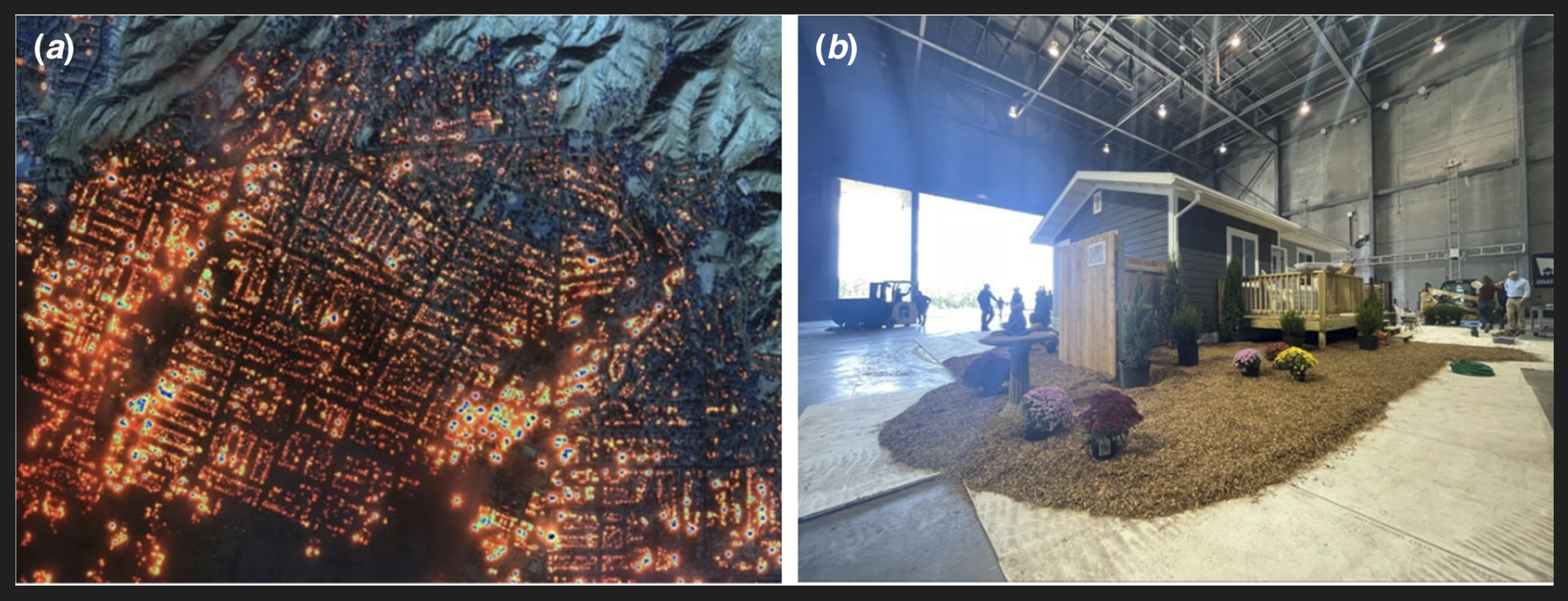
Fig. 1.
(a) Nighttime satellite image showing wildfire burning homes and buildings in the Altadena region, Los Angeles County, on 8 January 2025 (Source: Maxar Technologies); and (b) photograph showing landscaping mulch around a simulated structure used for WUI fire testing (Source: Insurance Institute for Business & Home Safety).
These results are from field experiments conducted in Marin County. The study shows why mulch, which has some level of flammability no matter what type you select, should be kept away from the areas closest to the home. Given the positive attributes of mulch, this study helps guide mulch selection for areas further from the home.
Here’s a summary of the findings:
Almost all wooden mulches present fire risk, some more than others
The level of risk appeared to depend on size, material, etc., with some much more easily generating embers and spotting.
Composted mulches were the least flammable and they presented only weak smoldering.
Particle size influences burning behavior, with mulch made of larger fir bark particles sustaining more vigorous flame spread vs smaller particles that primarily smoldered.
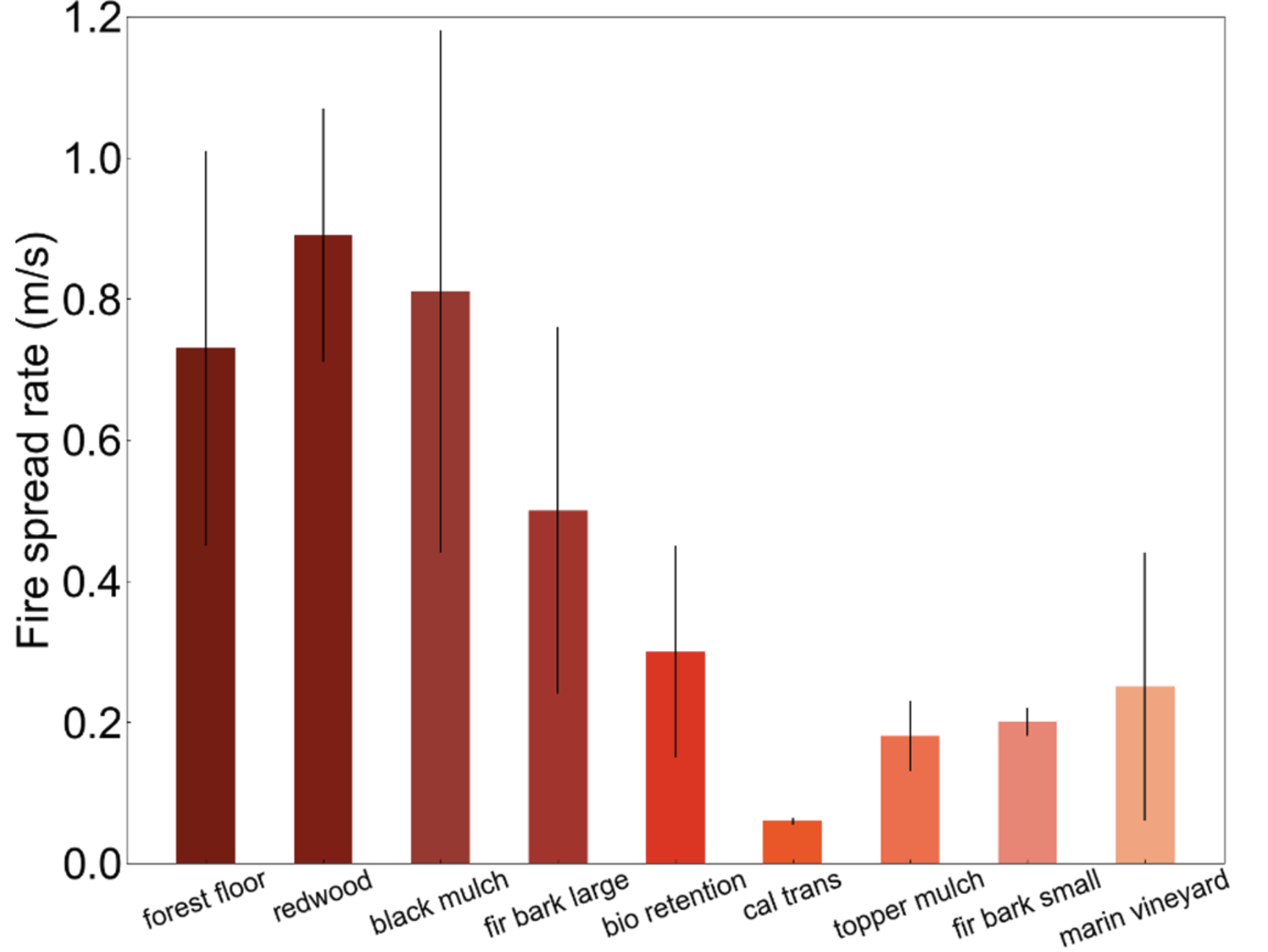
Fig. 11. Fire spread rate calculated based on the moving speed of the fire front. Note: the fire spread rate was calculated as the moving speed of the burning region (including the flame front or smoldering front), and the effect of spotting ignition by moving embers was not considered here. Moreover, the fire spread rate of screened compost was not shown, as the fire only burned locally without spreading within the mulch bed. The error bars represent the standard deviations of the repeated tests.
This study is a good example of the work being done to quantify risk in the WUI and find ways to make it safer.